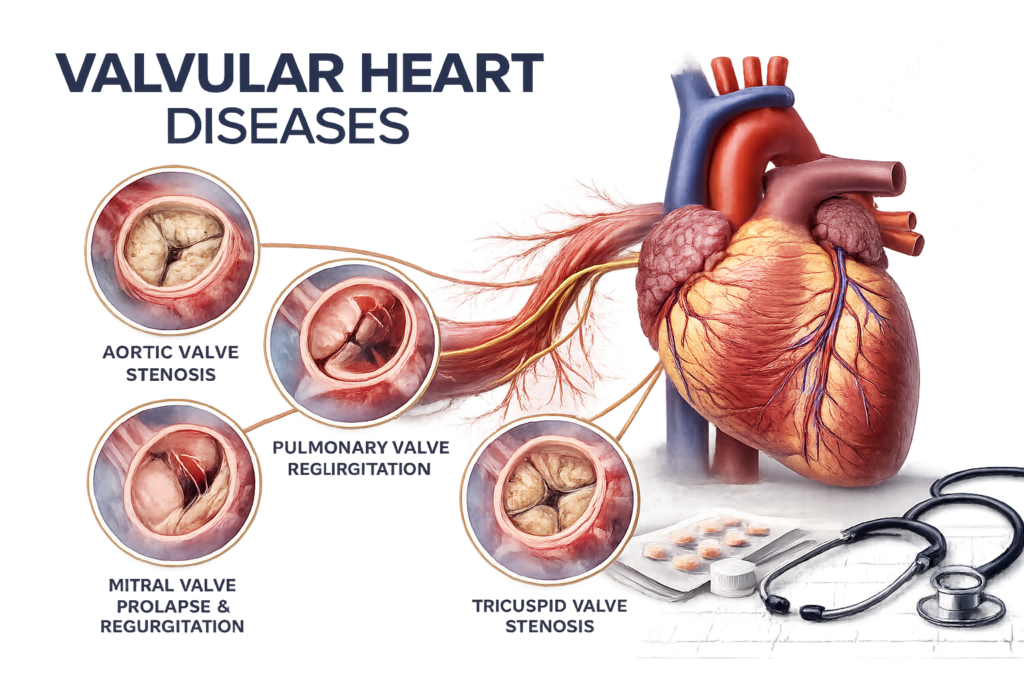
Valvular Heart Disease is characterized by disorders in which one or more of the heart valves are not functioning normally. The heart is composed of four valves: the aortic valve, the mitral valve, the pulmonary valve, and the tricuspid valve. These valves control the flow of blood through the heart. When the valves are damaged or diseased, it affects the normal functioning of the heart.
Valvular problems may develop gradually or be caused by infections, old age, or underlying medical problems. If valvular heart disease is not treated properly, it may lead to complications such as heart failure or reduced quality of life.
Valvular heart diseases are broadly classified into two main types:
Valve Stenosis
This occurs when a valve becomes narrowed and does not open fully, restricting blood flow. A common example is aortic stenosis, where blood flow from the heart to the body is reduced.
Valve Regurgitation
This occurs when a valve does not close properly, causing blood to leak backwards. For example, mitral regurgitation allows blood to flow back into the left atrium instead of moving forward.
Some patients may experience a combination of both conditions.
Some of the possible reasons for the development of valvular heart disease include:
Previous heart problems
The symptoms may also depend on the severity of the condition. For instance, some patients may not show symptoms in the early stages of the condition.
The common symptoms include:
The worsening of the symptoms may also be an indication that the patient’s heart valve needs urgent medical attention.
Accurate diagnosis is critical to determine the severity of damage to the valve and whether any treatment is required.
Tests used to diagnose heart valve problems:
Cardiac catheterisation – used to diagnose heart valve problems
Treatment varies depending on the valve disease, severity, and health status of the patient.
Medications
These are used to control symptoms and minimise heart workload, but do not treat the valve problem.
Valve Repair
Repair of the existing valve is preferred if possible. This preserves normal heart function.
Valve Replacement
If the valve is extensively damaged, it may need to be replaced with a mechanical valve or a biological valve.
Balloon Valvuloplasty
This is a minimally invasive procedure to enlarge a narrowed valve.
TAVR (Transcatheter Aortic Valve Replacement)
This is a new, minimally invasive treatment for aortic valve disease, particularly in high-risk patients.
Valvular heart disease frequently leads to important decisions, including valve repair or replacement surgery. However, not all cases require immediate surgery.
Having a heart specialist’s opinion can help you:
An expert opinion guarantees that the recommended procedure is suitable for your condition.
Upload your medical reports and receive an independent review from experienced cardiac specialists before making any major treatment decision.