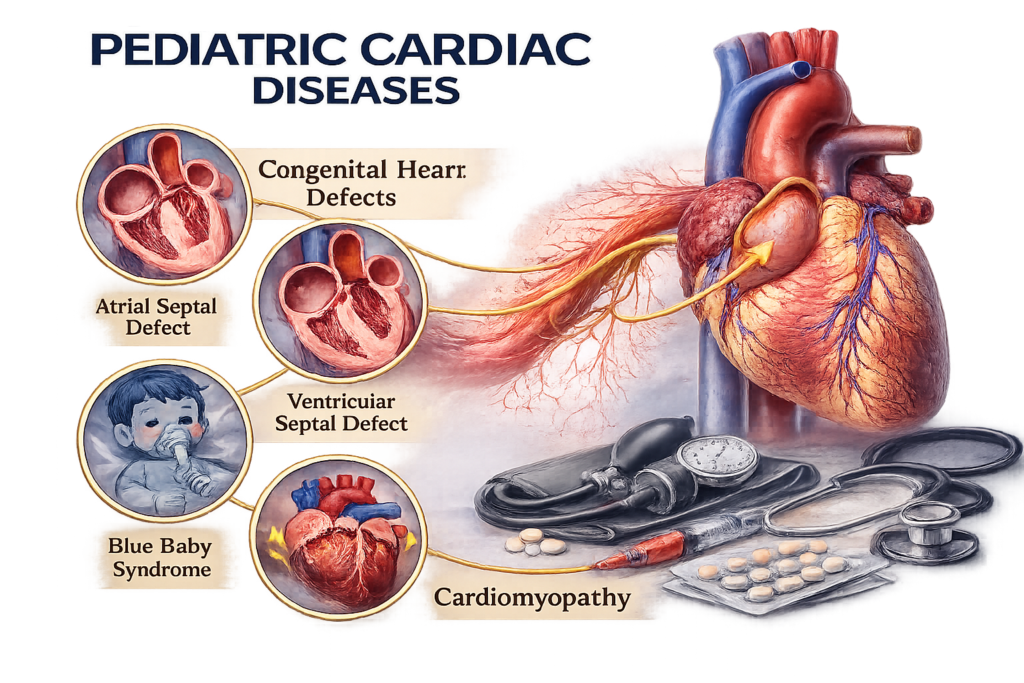
Pediatric cardiac diseases can be defined as heart disorders that affect children ranging from infants to young adolescents. They can occur at birth, also known as congenital heart defects, or as a result of other health conditions such as infections, genetic factors, and other health disorders.
The heart of a child is very important in their development. When there is an issue affecting the heart, whether structural or functional, it can impact their health in terms of oxygen supply and energy levels.
Although there are heart disorders that can be considered minor, others require treatment to help a child recover as best as possible.
Pediatric heart diseases are broadly classified into two main categories:
Acyanotic Heart Diseases
These are conditions where oxygen levels in the blood remain normal. Although blood flow within the heart may be abnormal, the child usually does not develop bluish discolouration.
Common examples include:
Atrial Septal Defect (ASD)
Ventricular Septal Defect (VSD)
Patent Ductus Arteriosus (PDA)
These conditions reduce oxygen levels in the blood, leading to a bluish discoloration of the lips, skin, or nails (cyanosis). These are usually more serious and require early medical attention.
Common examples include:
Tetralogy of Fallot
Transposition of the Great Arteries
Tricuspid Atresia
It is important for the parents of children with heart diseases to be aware of the symptoms, which include the following:
It is important for the parents to seek the services of a paediatric cardiac specialist in paediatrics in case they notice the symptoms in their children.
Pediatric cardiac diseases may occur due to:
In many children, it is difficult to clearly identify the exact causes of pediatric cardiac diseases.
Early and accurate diagnosis is important for proper treatment planning.
The common tests for the diagnosis of the condition are as follows:
A diagnosis of a heart condition in a child can be overwhelming. Before making decisions about procedures or surgery, it is often helpful to seek an expert second opinion.
A second opinion can help:
Confirm the diagnosis
Understand treatment options clearly
Evaluate whether surgery is necessary
Provide reassurance before major decisions
Upload your medical reports and receive an independent review from experienced cardiac specialists before making any major treatment decision.