Acyanotic heart diseases refer to a group of congenital heart disorders in which the oxygen content in the blood is normal. In general, this group of congenital heart disorders is characterised by abnormal blood flow in the heart and does not present with a bluish colour around the lips and skin.
Acyanotic heart diseases are some of the most prevalent heart disorders that affect children and are often diagnosed in infancy and early years. In most cases, it has been noted that this group of congenital heart disorders can be successfully managed, and some may resolve spontaneously without needing to be addressed immediately.
In acyanotic heart disease, there is an abnormal connection between the heart chambers or blood vessels. This results in an increase in the amount of blood sent to the lungs instead of being distributed as usual in the body. Although the oxygen level is normal, the heart may end up working harder than it normally should, resulting in symptoms.
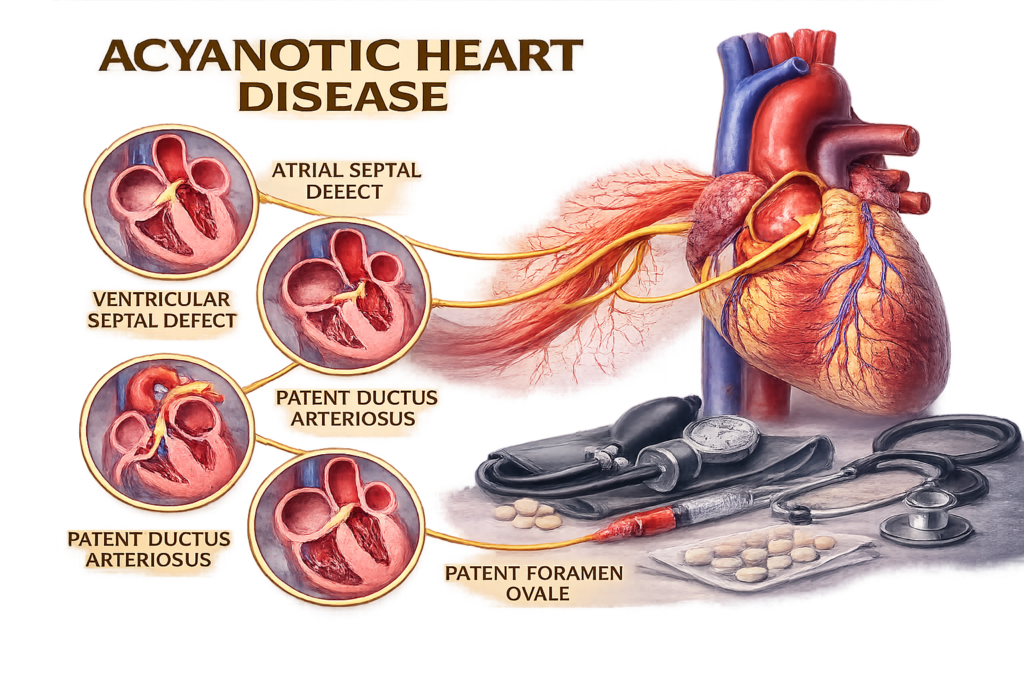
Atrial Septal Defect (ASD)
A defect in the septum between the heart’s upper chambers allows blood to pass from one chamber to the other.
Ventricular Septal Defect (VSD)
A defect in the septum between the heart’s lower chambers causes increased blood flow to the lungs.
Patent Ductus Arteriosus (PDA)
A condition in which the duct that normally closes after birth remains open, interfering with the circulation of blood.
These are just a few of the common heart defects diagnosed in children.
In some cases, children may not display any symptoms, especially if the disease is mild. Some symptoms to be aware of include:
Doctors use several tests to diagnose acyanotic heart disease and assess its severity:
Echocardiography (2D Echo) – primary diagnostic tool
Electrocardiogram (ECG) – evaluates heart rhythm
Chest X-ray – checks heart size and lung condition
Early diagnosis helps guide appropriate treatment and monitoring.
Treatment depends on the type and severity of the condition.
Small defects may close on their own and only require regular follow-up.
Used to manage symptoms and reduce strain on the heart.
Minimally invasive procedures can be used to close certain defects like ASD or PDA.
In more severe cases, surgical correction may be required.
Parents are often advised procedures early, but not every case requires immediate intervention.
Cardiac opinion can help:
Confirm whether treatment is necessary.
Understand if the condition can be monitored.
Explore less invasive options.
Avoid unnecessary procedures
An expert pediatric cardiac review provides clarity and reassurance before making decisions.
Upload your medical reports and receive an independent review from experienced cardiac specialists before making any major treatment decision.