Cyanotic heart diseases are a group of congenital heart diseases in which the level of oxygen in the blood is reduced. The reduced level of oxygen in the blood causes the lips, skin, or fingernails to turn bluish, a condition referred to as cyanosis.
It is important to note that these diseases are usually present from birth, with the condition sometimes requiring immediate attention in certain children, while in others, the condition can be managed with a planned schedule.”
In cyanotic heart diseases, the low-oxygen blood comes into contact with the high-oxygen blood, causing the body to receive less oxygen than required.This affects the level of energy, growth, and development of the child, and in some cases, the condition may lead to complications in the life of the child.
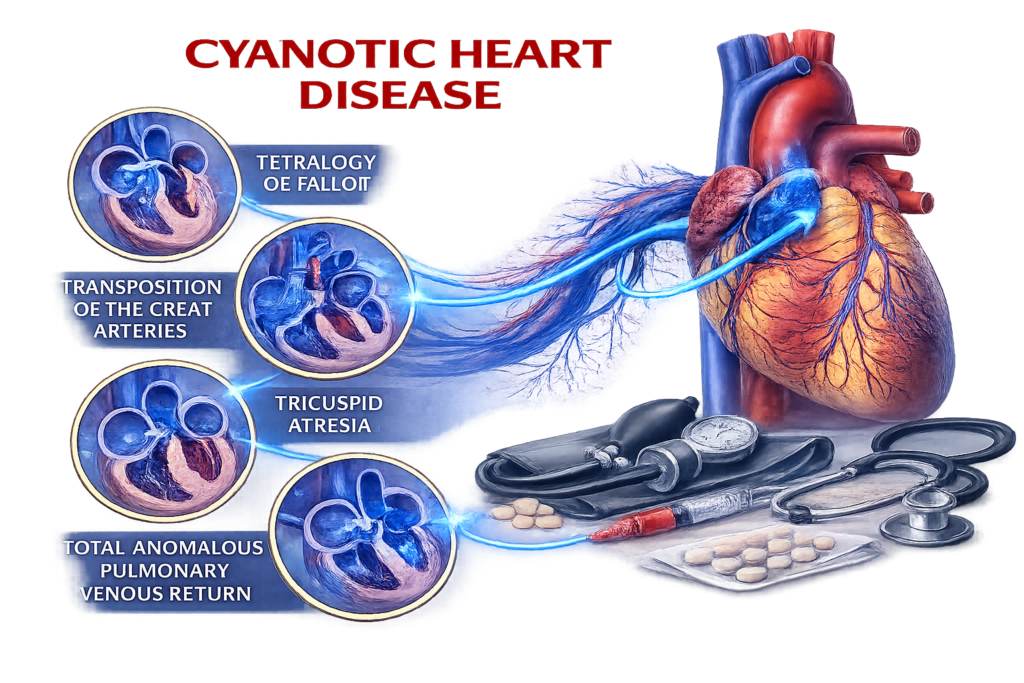
A combination of four heart problems that cause less blood to reach the lungs and lower the oxygen levels in the body.
A serious heart problem where the major arteries connected to the heart are reversed.
A heart problem where the tricuspid heart valve is missing or not fully developed, affecting the flow of blood within the heart.
A rare heart problem where the veins carrying oxygen-rich blood from the lungs are connected incorrectly to the heart.
Symptoms of cyanotic heart diseases tend to appear early in life, sometimes as early as birth.
The common symptoms include:
If the above symptoms are observed, it is important to seek medical attention.
Early diagnosis plays a critical role in managing cyanotic heart diseases effectively.
Common diagnostic tests include:
Echocardiography (2D Echo) – main test to assess heart structure
Pulse oximetry – measures oxygen levels in blood.
Chest X-ray – evaluates heart and lungs
Electrocardiogram (ECG) – checks heart rhythm
These tests help doctors understand the condition and plan appropriate treatment.
This, however, depends on the condition affecting the child.
Medications may be required to help stabilise the condition of the child.
Sometimes, the child may require oxygen support.
Many forms of cyanotic heart disease require corrective or palliative surgery to help improve the flow of blood and increase the levels of oxygen.
Sometimes, multiple procedures may be required, especially if the child is still young, as they grow up.
Early intervention is critical to help increase the levels of oxygen, promote growth, and prevent any further complications. With appropriate care, such children can lead active and healthy lives.
Early intervention is critical to help increase the levels of oxygen, promote growth, and prevent any further complications. With appropriate care, such children can lead active and healthy lives.
Cyanotic heart diseases often involve complex and critical treatment decisions. Parents may be advised to undergo early surgery, but understanding the timing, options, and risks is very important.
A second opinion can help:
Confirm the diagnosis
Understand the urgency of treatment.
Explore alternative or staged treatment plans.
Provide clarity before major decisions.
Expert guidance ensures that your child receives the most appropriate care.
Upload your medical reports and receive an independent review from experienced cardiac specialists before making any major treatment decision.