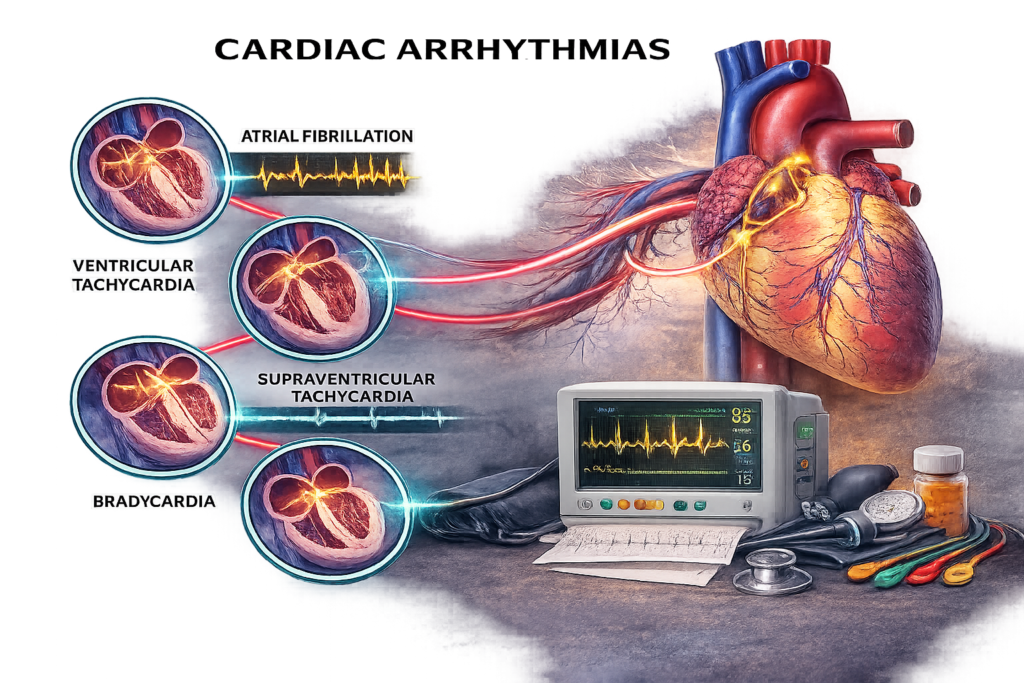
Cardiac arrhythmias refer to situations where the heart beats irregularly, either too quickly, too slowly, or with an abnormal rhythm. The heart always operates using a consistent electrical pattern to ensure proper pumping of blood. When there is interference with this electrical system, one is likely to experience an irregular heart rhythm.
There are various types of arrhythmias, which could be harmless or serious. Therefore, it is essential to understand the type of arrhythmia one is suffering from to ensure proper treatment.
An arrhythmia is a problem with the electrical signals that control the heartbeat. This may result from:
Sometimes, arrhythmias may happen for no apparent reason.
Tachycardia (Fast Heart Rate)
When the heart beats faster than normal, i.e., more than 100 beats per minute. Examples of such heart rhythm disorders include Atrial Fibrillation and Supraventricular Tachycardias.
Bradycardia (Slow Heart Rate)
When the heart beats slower than normal, i.e., less than 60 beats per minute. This leads to fatigue, dizziness, or fainting.
Irregular Heart Rhythms
When there is an abnormal heart rhythm, such as Atrial Fibrillation or Ventricular Arrhythmia, the heart beats irregularly.
Some arrhythmias may not display symptoms, while the common symptoms include:
To diagnose an arrhythmia, abnormal heart rhythms and their causes are identified.
Common tests include:
The treatment varies depending on the type and severity of the arrhythmia.
Lifestyle Changes
Stress reduction, caffeine reduction, and a healthy lifestyle may help in controlling mild arrhythmias.
Medications
These are used to control the rate and rhythm of the heartbeat and prevent complications such as the formation of blood clots.
Catheter Ablation
It is a minimally invasive procedure performed to treat abnormal electrical pathways in the heart.
Pacemaker or ICD
In severe cases of arrhythmias, devices may be implanted to help control the heart rhythm.
Decisions about treatments like ablation and device implantation are major ones. Not all abnormal heart rhythms need these kinds of procedures.
A second opinion may be helpful in:
Expert assessment will ensure the best treatment for your condition.
Upload your medical reports and receive an independent review from experienced cardiac specialists before making any major treatment decision.