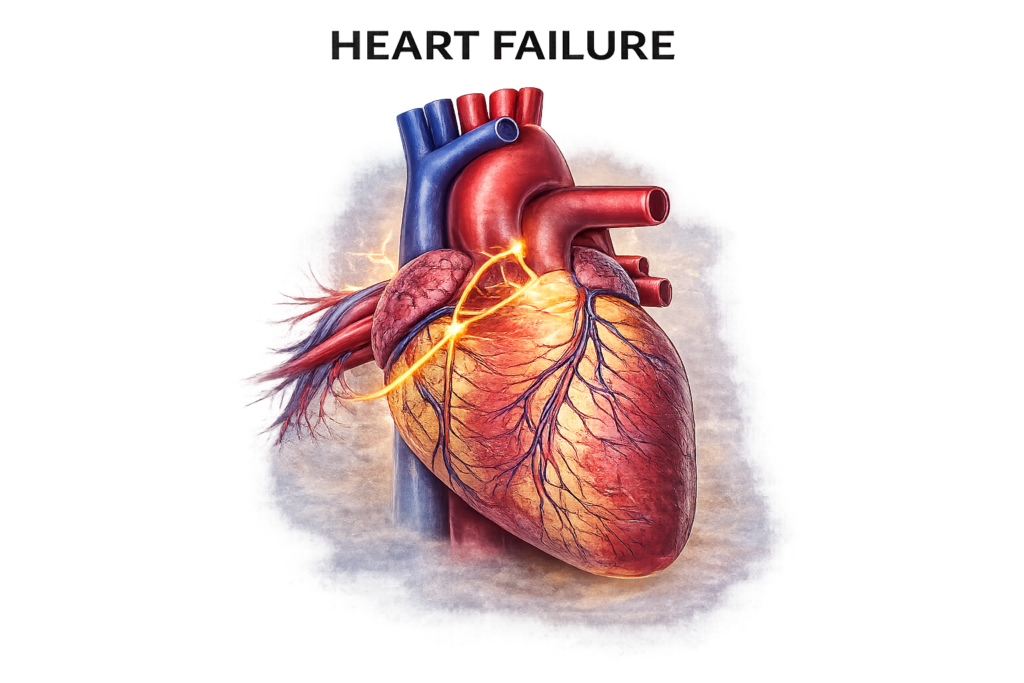
Heart failure is a condition in which the heart is not able to pump blood in an efficient manner to meet the body’s demands. This does not mean that the heart has stopped beating, but it is not beating in the most efficient manner it should. When the heart is not able to pump blood in an efficient manner, the body may not be able to receive the oxygen and the necessary nutrients it requires. This may lead to fatigue, breathlessness, and the accumulation of fluids in different parts of the body. Heart failure may occur gradually or suddenly, depending on the causes.
Heart failure is usually caused by other heart problems that affect the heart muscles.
Common causes of heart failure include:
Heart failure can be classified depending on the impact of the heart as follows:
This is the most common type of heart failure, where the left side of the heart is unable to pump blood. This results in fluid accumulation in the lungs.
This type of heart failure results from an inability of the right side of the heart to pump blood, leading to swelling of the legs, ankles, and abdominal area.
This is a term that is often used when fluid accumulation is more pronounced, affecting the lungs and other tissues of the body.
Symptoms may develop slowly or worsen over time.
Common signs include:
Shortness of breath, especially during activity or while lying down
Persistent fatigue or weakness
Swelling in the legs, ankles, or abdomen
Rapid or irregular heartbeat
Difficulty exercising
Sudden weight gain due to fluid retention
Persistent cough or wheezing
If symptoms are severe or sudden, immediate medical attention is required.
It is also important to note that some people may not display any symptoms in the early stages of coronary artery disease. Nevertheless, as the disease advances, some symptoms may include:
In some cases, the first sign that someone is suffering from coronary artery disease may be a heart attack.
The treatment for coronary artery disease varies based on the severity of the blockage and the patient’s health condition. The main aim of the treatment is to ensure the unobstructed flow of blood to the heart and avoid complications.
The treatment for coronary artery disease may include:
Lifestyle Modifications
Lifestyle modifications are an important part of the treatment for coronary artery disease. This may include eating a healthy diet, regular exercise, quitting smoking, controlling stress levels, and maintaining a healthy body weight.
Medications
In some cases, doctors may recommend the use of medicines to control the levels of cholesterol in the blood, lower blood pressure, and regulate heart function.
Percutaneous Coronary Intervention (PCI)
The minimally invasive procedure involves the use of a balloon catheter that is inserted into the blocked area and then opened to allow the smooth flow of blood. In some cases, a stent may also be used.
Coronary Artery Bypass Surgery (CABG)
In cases of severe blockage and the involvement of multiple arteries, the doctors may recommend bypass surgery. This involves the creation of a bypass for the blood flow.
Decisions regarding procedures such as angioplasty or bypass surgery are significant and should be made carefully. Seeking a cardiac second opinion allows patients to confirm their diagnosis, understand all available treatment options, and ensure that the recommended procedure is truly necessary.
An independent review by experienced cardiology specialists can provide additional clarity and confidence before undergoing any major heart procedure.
Upload your medical reports and receive an independent review from experienced cardiac specialists before making any major treatment decision.